Share
Goals vs Identity Part 2 & Vegan Peanut Butter Cookies
 ‌ ‌ ‌ ‌ ‌ ‌ ‌ ‌ ‌ ‌ ‌ ‌ ‌ ‌ ‌ ‌ ‌ ‌ ‌ ‌ ‌ ‌ ‌ ‌ ‌ ‌ ‌ ‌ ‌ ‌ ‌ ‌ ‌ ‌ ‌ ‌ ‌ ‌ ‌ ‌ ‌ ‌ ‌ ‌ ‌ ‌ ‌ ‌ ‌ ‌ ‌ ‌ ‌ ‌ ‌ ‌ ‌ ‌ ‌ ‌ ‌ ‌ ‌ ‌ ‌ ‌ ‌ ‌ ‌ ‌ ‌ ‌ ‌ ‌ ‌ ‌ ‌ ‌ ‌ ‌ ‌ ‌ ‌ ‌ ‌ ‌ ‌ ‌ ‌ ‌ ‌ ‌ ‌ ‌ ‌ ‌ ‌ ‌ ‌ ‌ ‌ ‌ ‌ ‌ ‌ ‌ ‌ ‌ ‌ ‌ ‌ ‌ ‌ ‌ ‌ ‌ ‌ ‌ ‌ ‌ ‌ ‌ ‌ ‌ ‌ ‌

Web Version of this Email

Enjoying this newsletter? Know someone who’d love it too?
Click here to forward it to a friend

And if a friend sent this to you — don’t miss the next one!
Click Here to Subscribe

Have Lifelong Wellbeing Newsletter

April 2026

Welcome to the 139th edition of the Have Lifelong Wellbeing monthly newsletter! If you celebrate Easter as I do, I pray you have a Happy and Blessed Easter!


If you are a new reader, please know it's my life's passion to erase pain from the world and empower lives to age with strength, truth, wisdom, and joy. This newsletter is a cherished labor of love and I thank you for allowing me into your inbox each month. I'm humbled by your trust in me to provide content of value and I will continue to strive to that end. 

UPCOMING CLASSES

This Month's LIVE MELT Class: 

Posture Reset Class 4: Added bonus w/3 plane movement 

April 14th at 5 pm Eastern   Recorded if you can't make it live

Join us for a new MELT Class each month! Purchase 5 classes and get a class FREE! Special discount for Academy and paid level Private Club members.

Click Here to Learn More

On-Demand Virtual Classes

For those with a challenging schedule ~ recorded classes to access 24/7, INCLUDING an effective four class series for Urinary Incontinence done on your feet, an Age Well With Strong Bones course, and a Nourish Your Body for Lifelong Wellbeing course!

Click Here to Learn More

MONTHLY EVENTS FOR HLW ACADEMY STUDENTS

Office Hours with Eileen

April  6th at 12 pm Eastern

Topic: Best Starting Point. This is a special hour to learn something new from Eileen and get your questions answered on any of the following topics: pain, aging, exercise, nutrition, etc. 

Monthly Reward Event

April 7th at 12 pm Eastern

Special Guest Speaker: Sinéad O'Donovan > Stress and Gut Health

Unique Workout

April 7th at 11 am Eastern

This week: The Eyes Have It. Every Tuesday is a unique workout that promotes optimal mobility, stability, strength, or stamina in 3 planes of motion. Taught LIVE with Q&A.  

Click Here for Academy

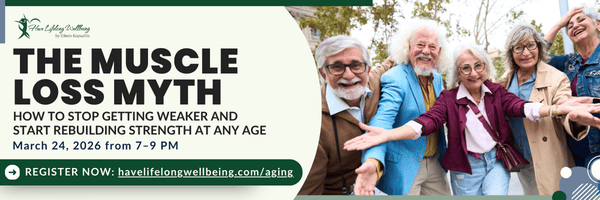
Another major thank you is in order! Last month over 500 inquisitive people registered for the Muscle Loss Myth event. These free online events are truly a labor of love as my mission is to erase pain from the world. I am so thankful for those who attended, their kind words, and comments about how much this information has helped them. It warms my heart and it’s why I do what I do. Thank you!

This Month's Article

Goals vs Identity Part 2

Last month I shared about a Beta program that ended this past February. The logistics of the program were presented as well as some of the beginning and final assessment scores. This month, I’d like to highlight why certain assessments were chosen and why certain strategies were recommended. Was there a method to this madness? I’m sharing this in hopes it may provide some insight and helpful guidance in your own life.


                                                                 The Future Self Letter


To write down how you see yourself in six months can be a daunting and almost terrifying task. It requires hope that you can make a difference in your future by your actions. Many of these wonderful people had what they saw as all odds stacked against them. They were used to expecting nothing to change and often expecting things to worsen over time.


There was more than one in the group who really struggled with this task. Fear of failing to achieve a hoped-for future can be a very imposing obstacle.


The purpose for this task? To engage the brain to assist in achieving who they wanted to become in six months. This isn’t woo-woo stuff! Have you ever thought about the car you want to buy, including the color, and then you see that car everywhere you go? Your brain (actually your mind) works to help you with what you focus your attention on. Focusing your attention on what you desire your future to be is much more powerful than you can imagine.


If you believe you can’t do something, and you don’t envision having accomplished it, your mind will cause you to procrastinate, make excuses, fall short, and ultimately fail to succeed when you try to move forward. Your mind will work against you.


You can’t fool your mind into becoming someone you don’t believe is possible. But you can program your mind to help you get there when you focus on the outcome you actually want; in detail, front and center every day. Your mind literally becomes programmed to believe you are that very person and helps you to get there!


I challenge you right now to take a few minutes and do this very thing. Put it somewhere where you’ll see it every day. Read it out loud. Train your brain to work with you to get there.

  • Where would you love to see yourself in six months?

  • What does your morning look like?

  • Who do you spend time with?

  • What have you accomplished in your personal and professional life?

  • What are you most proud of that you did in those six months?

Did everyone achieve everything they envisioned by the end of the program? Not all. Did everyone believe they could continue to move forward and impact their lives in a way they didn’t think was possible before the program? Yes.


                                                                        Assessments

Before beginning any new journey, you need to know your starting point. Have you ever used online maps? They ask for your starting point every time. Knowing this gives a good picture of how you will structure the first steps of the journey.


Personal Health Assessment


This really shows how much impact many factors are having on your risk of developing degenerative conditions. While risk factors are not absolutes, it’s wise to take them into account if aging well is a goal in life. It’s not just about food. This assessment asks about relationships, career, outlooks, stressors, sleep habits, exercise, regularity, illnesses, and much more. It is three pages and takes about 10 minutes to complete.


I’ve provided this assessment at the beginning and end of my local, in person, Nourish Your Body for Life classes and seen radical improvements in scores in just a matter of weeks.


Many are surprised with their initial scores as they believed they were doing ok, all in all. A high score can be very motivating to improve as the lower the score the lower the risks. Seeing all the categories that can be easily changed with relatively minor adjustments in life is encouraging overall. The problem arises when you are ignorant of these things and think all is ok. It’s not about being perfect. It’s about knowing the right things to do and choosing the ones that matter most to you.


Strength Assessment

If you attended the recent Muscle Loss Myth event you were instructed in how to assess two extremely important functions.

  • The ability to get on and off the floor safely without assistance ten times in a row without rest.

  • The number of times you can sit and stand up from a chair in thirty seconds without using your hands.

These two things carry more weight in how well you’ll age than almost any other assessment.


Yes, you can test your grip strength; yet I’ll be the one to tell you the truth. If you struggle to get on and off the floor, your grip strength probably won’t be good. Will it matter if you work a gadget to increase your grip strength? Will that enable you to get on and off the floor with ease? No. Common sense dictates that a weak grip strength is a side effect of weakness in the areas that really matter. Areas like Max (glutes), core, and ankles. Working your grip strength will not increase strength in Max or anywhere else.


A weak grip is not the cause of losing your independence as you age; despite all the hype being promoted. It’s another error of attribution that makes great headlines.


Pain Assessment


This assessment is critical so any improvements (no matter how small) can be seen. If someone is dealing with chronic pain patterns, moving forward is challenging. Seeing scores improve, even if it’s slow, can be very encouraging. It’s also eye opening as to what specific areas are experiencing pain. When walking? When sleeping? When sitting? Another helpful part of this assessment is whether or not pain meds have been taken and how well they helped the pain. Details matter.


Movement Performance Assessment (MPA)

This assessment is absolutely key to understanding how well your body is functioning in real life. Just six movements (done on the right side and the left) expose deficits in 66 different joint motions. Wow, right?! The best part? You don’t need to know any of that in order to observe areas you may have been completely clueless weren’t working right. If you have knee pain and you see your ankle lacks motion that critical information provides a more accurate clue for you to know how to move forward.


If you have low back pain and see your right hip doesn’t move well in a certain direction, that will also help you to make a more informed decision moving forward.


This is a most essential assessment for everyone to do. So much of what is looked at when pain is reported completely misses the mark in treatment. This is another reason why pain management is such a prolific business. As long as the human body is not seen as a whole and patients are seen as body parts when they walk in the door, human misery will continue to occur due to well-meaning, but inaccurate treatments.


You are not a bunch of parts. Everything is connected to everything else. Every body part is impacted by every other body part on a global scale. Isolating body parts during treatment will rarely lead to successful pain resolution.


Balance Assessment


So many online searches about balance will recommend standing on one foot and counting to ten. Have you ever known anyone to fall who was just standing still? Falls happen when people are moving. This means balance must be trained in motion, not stillness.

.

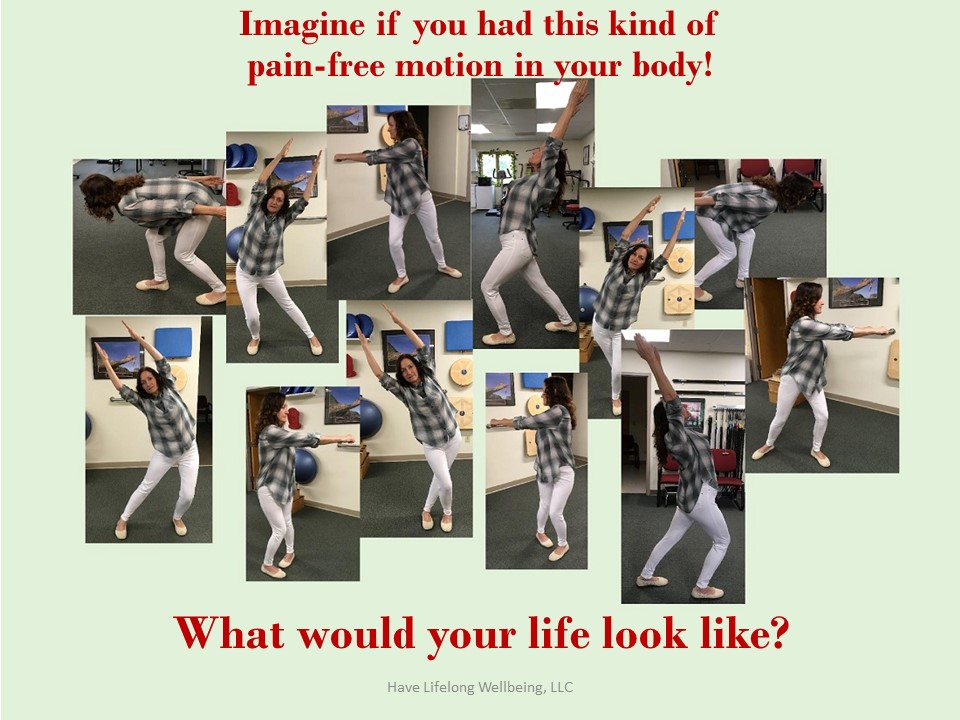
Assessing balance in a stride position, in all three planes of motion, is an ideal way to learn which areas show impairment and where to focus. I've taught this assessment many times during live events. It can be a real eye opener exposing deficits in stability. This is also an excellent way to keep track of improvements. 


I can’t tell you how many people have told me they ‘almost’ fell (but didn’t) when walking on uneven or even slippery surfaces. They were elated to share they were able to catch themselves and prevent falling. They attributed this directly to the training they’ve done based on the content provided by Have Lifelong Wellbeing, LLC.


Don’t you think it might be a good idea to assess your balance in a meaningful way and not just when standing still?


Food Journal


While the Personal Health Assessment asks lots of questions around food, this five-day journal is a real reality check for most people. So many of us mentally think we’re doing better than we actually are when it comes to food and water intake. An honest assessment is key as food and water profoundly impact things like joint pain, muscle pain, inflammation, energy levels, and healing ability.


If you’re willing to really look at what you put into your mouth every day for five days, you may be surprised. You don’t need to measure portions; just list the foods and the amount of water each day. It's common to think we're doing better than we actually are when it comes to what we put in our mouth.


Initial Consultation


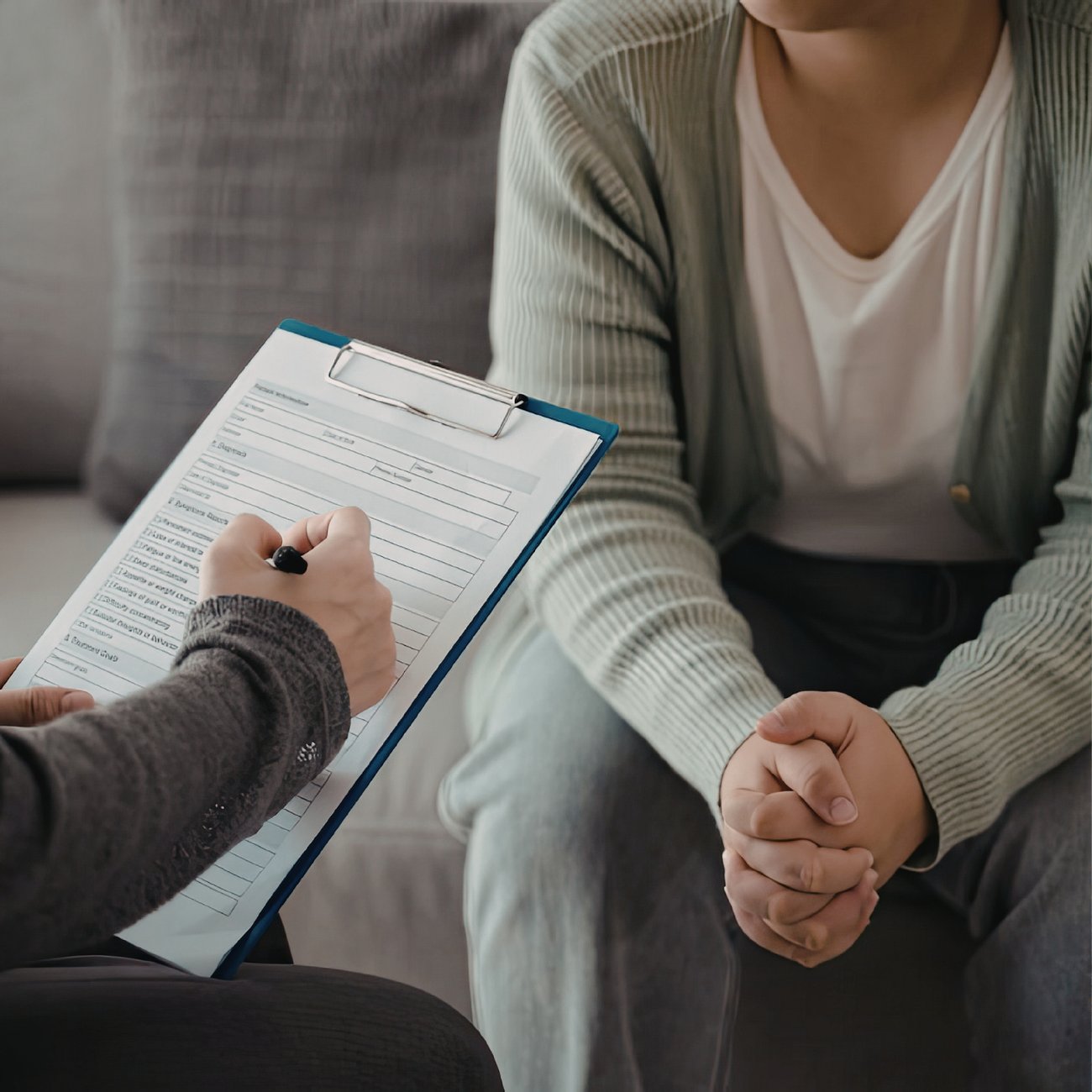
Meeting with each of these amazingly brave individuals to discuss their assessments and histories in detail was essential in creating a starting point that was doable. One that would breed success, not disappointment. One of the biggest issues I see with people who start a health improvement endeavor is the lack of expert guidance based on their specific starting point. This often leads to pain, injury, and failure. The exact opposite of what was hoped for when they began.

The real power behind support and guidance is the fact it eliminates guessing. Knowing what to do, why to do it, and how to stay accountable radically improves outcomes.


We reviewed scores of all the assessments and provided first steps to take to encourage success. Here’s a snapshot of how this went. This was different for each group member.

  • Chronic pain scores moderately high

  • Multiple areas show impairment in the MPA

  • Moderate score on balance.

  • Strength score shows unable to do 10 on/off the floor and pain with sit to stands.

  • Food journal shows some inflammatory foods and low water intake.

  • PHA has a score above 60.

We began with recommended workouts to improve strength and to improve stability ensuring no pain during the repetitions. Workouts were also recommended based on areas of impairment exposed in the MPA. Food changes were recommended to reduce inflammation and improve hydration. Other strategies were recommended to address pain and stability such as specific MELT Method maps and treatments. Personal choices were made to address the PHA score.


Typical workouts were ~20 minutes in length. Often 4 or 5 different workouts were suggested to be done each week, some 1-2 times, some 2-3 times each week. Yes, this required a commitment, on average of 45 min to one hour each day. Change doesn't happen without commitment to do the work. This is why the weekly meeting were pivotal in providing accountability, encouragement, and real caring between the members. 

                                                           The Floor That Carried Them


Many people think success comes from heroic effort — the perfect workout, the flawless week of eating, the burst of motivation. It doesn’t. Success comes from what you refuse to fall below when life gets messy. In this program, we focused on raising the floor right where we stood, not chasing a ceiling that may never be touched. Each member was asked to determine what could be done, no matter how their schedule may be impacted by life. They chose their floor. The things that would get done, no matter what.


Some days were strong. Some days were survival mode. But there were almost no zero days. Ten minutes of movement instead of sixty. Better choices instead of perfect choices. Showing up even when motivation vanished.


Because one perfect day changes nothing. Hundreds of ordinary days change everything. Repetition, not inspiration, built their journey forward.


We focused on what was accomplished, not what wasn’t done each week. The gains were what mattered. If you make a determined effort to look at what you’ve accomplished when working toward a goal and not what you haven’t yet done, you’d be surprised how motivating and helpful that is toward success.


They moved the needle forward with some bumps along the way, but they moved forward.


                                                   Why Accountability Changes the Game

Environment shapes behavior. When you surround yourself with people who expect progress, your standards rise. Your brain mirrors what it sees around you.


This program created an environment where quitting felt out of place and persistence felt normal. Some wanted to quit but chose not to because of the community environment and support that was invaluable, honest, caring, and raw. We met every single week. We posted what we did every single week before we met. We discussed our gains and shared our challenges. 


Sometimes there were tears of frustration. Sometimes there were tears of joy. The thing that remained constant was the caring and support the members gave to each other every single week. 


Expert guidance continued each week and monthly reassessments were performed throughout the program. Based on previous assessments, certain ones were recommended to repeat; not all. Recommended workouts and strategies were altered based on the reassessment scores.


They didn’t just receive advice. They received doable structure. They received real encouragement. They received helpful corrections when needed. Some received belief from the group until they could borrow it for themselves.


They succeeded because they stayed. They kept showing up after hard days. They kept adjusting instead of quitting. They kept going even when belief lagged behind effort.


Crossing the finish line didn’t make them extraordinary. It revealed that they already were extraordinary people who could finish what they started.


                                                                          A Challenge


You might be reading this thinking: “That’s great for them… but not for me.” Let me tell you that is the lie that decline ‘whispers’.


Here is the truth:


Most limitations are not permanent — they are unchallenged. Progress doesn’t require extraordinary talent. It requires consistent action guided by expertise.


If you believe your situation is too complex…If you believe your pain is too severe…If you believe you’ve waited too long…


Then this challenge is for you. Prove it. Not to me. Not to anyone else. Prove it to yourself.


Give consistent effort the chance it may have never had before. Raise your floor. Create systems to do the work. Focus on your gains. Surround yourself with people who refuse to let you settle. Because the life you think is impossible may simply be waiting on the other side of sustained action.

You are not too late - You are not too broken - You are not the exception. 

You can build a life instead of managing decline.

Would you like to locate the core issue(s) of your pain, balance deficits, or weaknesses and learn how to address them with powerful (safe) self-care methods so you can move without pain and age without decline? You can work with Eileen one-on-one! Just ask a question or schedule a consultation via Zoom by clicking the button below.

You CAN resolve pain and age independently by training authentically and nourishing well.

Click Here to Learn More

Recipe of the Month


Vegan Peanut Butter Cookies


I really don’t have much of a sweet tooth; yet I do like a fresh baked peanut butter cookie from the oven. When I came across this recipe from Shane and Simple I just had to share it. 


Preparation: 10 minutes
Cooking time: 12 minutes

Servings: 12


Ingredients:
  • 1 cup almond flour (Do not use regular flour in this recipe because the cookies won’t hold together)

  • ½ cup natural peanut butter (crunchy or smooth) We make our own in our Vita-Mix.

  • ¼ cup maple syrup

  • Salt to taste (optional)


Preheat oven to 375 degrees F and line a baking sheet with parchment paper.


Add all ingredients to a large bowl and mix until everything is well combined and looks like a big dough ball.


Scoop out 1 to 1 ½ Tbsp. of dough and roll into balls. Place each ball about 2 ½ inches apart on the baking sheet. Use a fork and gently flatten the cookies in a crisscross pattern. Dip the fork in water to prevent it from sticking to the cookie dough when pressing down.


Bake on the center rack for 12 minutes or until they just start to look slightly golden. Remove from the oven and let the cookies cool for a few minutes. Then, move the cookies to a wire rack and allow them to cool completely.


The cookies will look a little undercooked and soft but will firm up as they cool. If you want more crunchy crispy cookies simply let them bake for a few more minutes. But, be sure to keep an eye on them because they will burn.

Want peace & joy instead of fear & stress?

Click Here to Learn More


Email Marketing by ActiveCampaign