|
|
|
|
Have Lifelong Wellbeing Newsletter |
March 2026 |
|
|
|
|
|
I always LOVE to begin by thanking those who make my online events so special. Last
month over 400 wonderful peeps registered for the Stop Joint Pain event. Saying thank
you doesn’t seem like enough. It truly warms my heart to see, hear, and read all your
comments and successes. It’s why I do what I do. Thank you! |
 |
|
|
|
Welcome to the 138th edition of the Have Lifelong Wellbeing monthly newsletter!
If you are a new reader, please know it's my life's passion to erase pain from the world and empower lives to age with strength, truth, wisdom, and joy. This newsletter is a cherished labor of love and I thank you for allowing me into your inbox each month. I'm humbled by your trust in me to provide content of value and I will continue to strive to that end. |
|
|
|
|
|
|
|
|
This Month's LIVE MELT Class:
Posture Reset Class 3: Added bonus w/3 plane movement
March 10th at 5 pm Eastern Recorded if you can't make it live
Join us for a new MELT Class each month! Purchase 5 classes and get a class FREE! Special discount for Academy and paid level Private Club members. |
| Click Here to Learn More |
 |
|
|
On-Demand Virtual Classes
For those with a challenging schedule ~ recorded classes to access 24/7, INCLUDING an effective four class series for Urinary Incontinence done on your feet, an Age Well With Strong Bones course, and a Nourish Your Body for Lifelong Wellbeing course! |
| Click Here to Learn More |
|
|
MONTHLY EVENTS FOR HLW ACADEMY STUDENTS |
|
|
Monthly Reward Event
March 3rd at 12 pm Eastern
Special Guest Speaker: Timaree Hagenburger (aka the Nutrition Professor) > Dessert for Breakfast? She'll be demonstrating her signature Dessert Nacho Foodie Bar
Unique Workout
11 am Eastern
This week: Side by Side frontal plane workout. Every Tuesday is a unique workout that promotes optimal mobility, stability, strength, or stamina in 3 planes of motion. Taught LIVE with Q&A.
Office Hours with Eileen
March 2nd at 12 pm Eastern
Topic: Physical Therapy; what works and what doesn't. This is a special hour to learn something new from Eileen and get your questions answered on any of the following topics: pain, aging, exercise, nutrition, etc. |
| Click Here for Academy |
|
|
This Month's Article |
Goals vs Identity |
|
|
|
FYI: I'll be teaching something later this month that focuses on
one of the biggest concerns about getting older! Stay tuned...
Having written 137 monthly newsletters before now, deciding what to share next is never casual. My focus is always the same: what topic could bring you the greatest benefit — what hasn’t yet been said that might help you live stronger, longer, and better?
Yet this month, the topic found me.
For the past six months I’ve been working with a small BETA group, and what I learned from them changed me in ways I did not expect.
If you were part of that group and you’re reading this, I wish I could reach through these pages and hug you. Of course, my mother used to say, “If wishes were horses, beggars would ride.” My mother had many interesting sayings — and most of them carried more wisdom than I understood at the time.
I must begin with this:
Every single one of you taught me something invaluable about what it truly takes to move forward from a place that feels impossible from which to move.
I believe I will continue learning from this experience for years to come, and that knowledge will help many others reclaim lives they thought were slipping away.
How the Program Began
I enrolled in a program last July offered by my publisher that was designed to teach how
to accomplish more in less time. I don’t mean a time management course. Those are a dime a dozen. I mean a way to propel forward you didn’t know existed.
Since my mission is to erase pain from the world and radically reduce the risk of people who end up in nursing homes due to preventable decline, I was intrigued about this concept. If there were strategies that could accelerate meaningful progress in a group setting, ways to apply what I already knew worked in my private, one on one, Pain Program that could be applied to a group in a streamlined manner, I wanted to investigate further. One on one limits how many people I can help as there are only so many hours in a day.
So... this program got me thinking. What if I designed a program that offered that same forward momentum in a group setting — not for business goals, but for chronic pain, mobility loss, weakness, and declining health?
Over 30+ years, I’ve observed something critical. People do better with expert guidance, a supportive community, clear direction, and accountability.
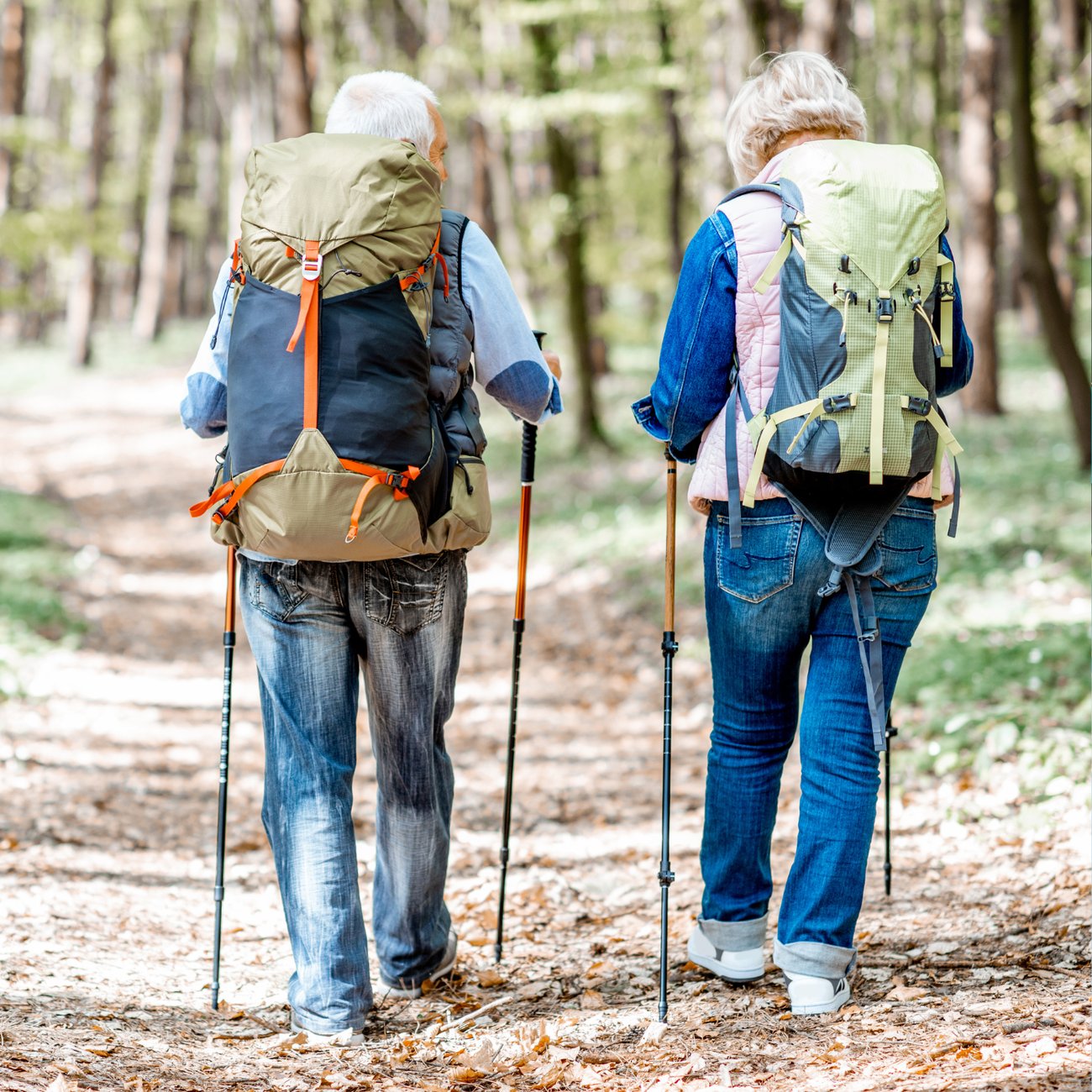
Twelve brave individuals stepped forward.
|
 |
|
I call it a BETA group because I genuinely didn’t know how it would unfold. We were stepping into unmarked territory. I've never attempted this cross between one on one and class teaching. There were no guarantees. Only willingness — theirs and mine.
The Starting Point — Identity Before Goals
The first task surprised many of them. Each member was asked to write a six-month future-self letter.
Not a list of goals but a description of who they would become in six months. This was done to engage the brain — because lasting change is never purely physical. It requires rewiring the brain, addressing emotional issues, and changing who you see yourself to be.
Many participants had grown accustomed to expecting decline. Writing about a better future required hope — something some hadn’t felt in a long time. But this is where transformation begins.
Goals only focus on outcomes. Identity focuses on becoming someone you didn’t know you could become. And identity determines behavior; whether for the good or the not so good. More on this later.
Clarifying the Starting Point |
 |
|
I determined it would be necessary to get a full assessment of many areas to know the point each person was currently in on a physical and health level. They did seven assessments independently and then we began with a one on one review.
Initial Intake
We reviewed medical history, medications, surgeries, injuries, and concerns to ensure guidance would be safe and appropriate. Each person met with me individually for a 45-minute Zoom session to map out their starting direction.
Personal Health Assessment
This evaluated risk of disease through diet, hydration, exercise habits, stressors, and lifestyle patterns. A score below 20 indicates excellent habits. 66 or higher signals high risk for disease development.
Starting scores ranged from 20 to 92. Ending scores ranged from 12 to 82, with many dropping their scores by half.
Strength Assessment — The Aging with Independence Test
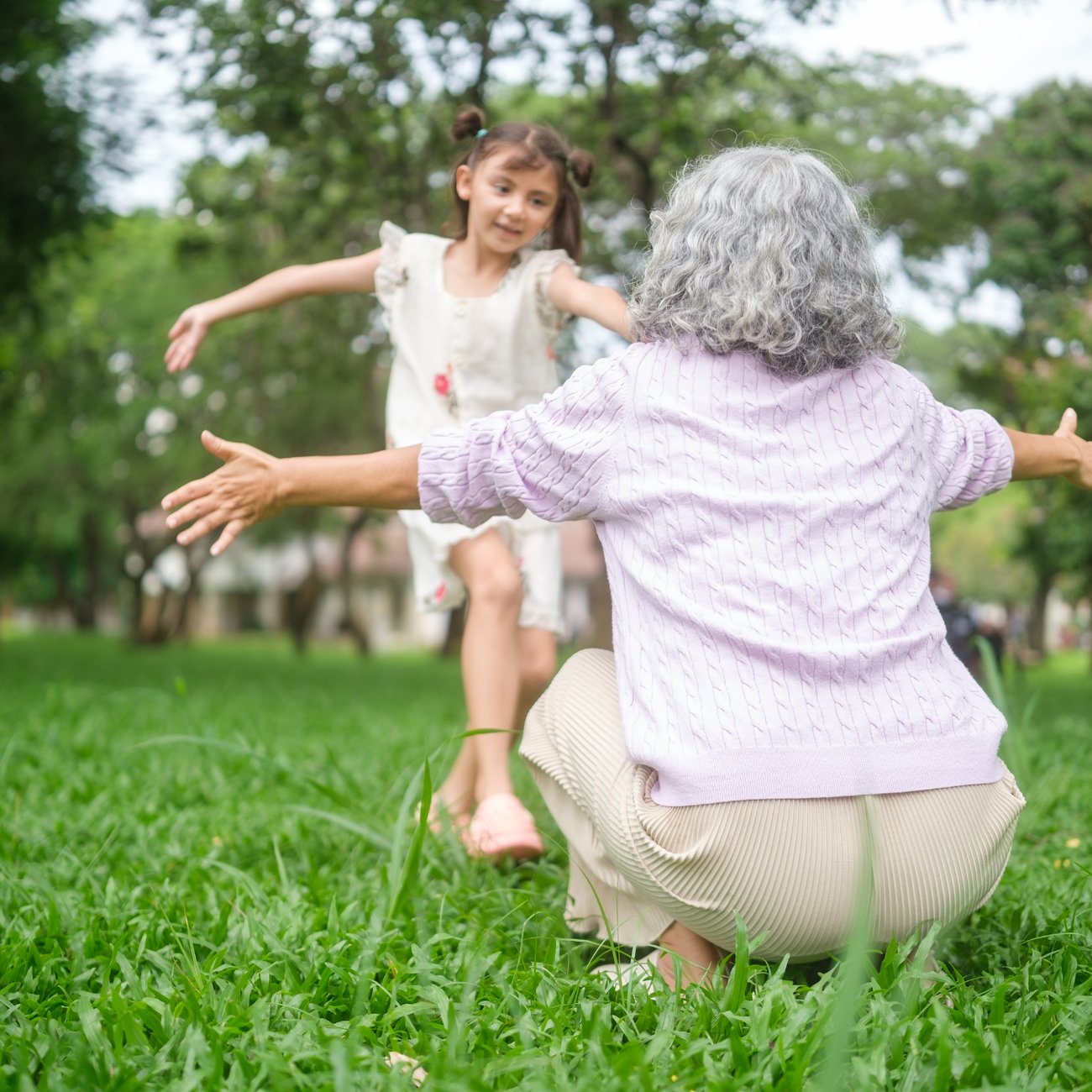
Strength is an important factor determining whether a person remains independent as they age. |
 |
|
Functional leg strength and the ability to transition to and from the floor is C-R-I-T-C-A-L.
We measured:
• Number of sit-to-stands performed in 30 seconds (no hands and if there was any pain)
• Ability to get on and off the floor ten times without assistance or needing to rest
Starting scores for sit-to-stands ranged from 10 to 25. Ending scores ranged from 15 to 28, with most exceeding 20 and experiencing far less pain — or none at all. For those who initially could not get on and off the floor ten times, improvement was seen across the board.
Strength restored more than just muscle. It restored confidence.
Pain Assessment
Pain was measured based on how it interfered with daily life which is what matters most. The highest possible score was 120 — and like golf, the goal was the lowest number possible.
Many (not all) experienced dramatic improvements. One member dropped from 69 to 8. That is not a small victory. That is a life reopening.
Movement Performance Assessment (MPA) |
 |
|
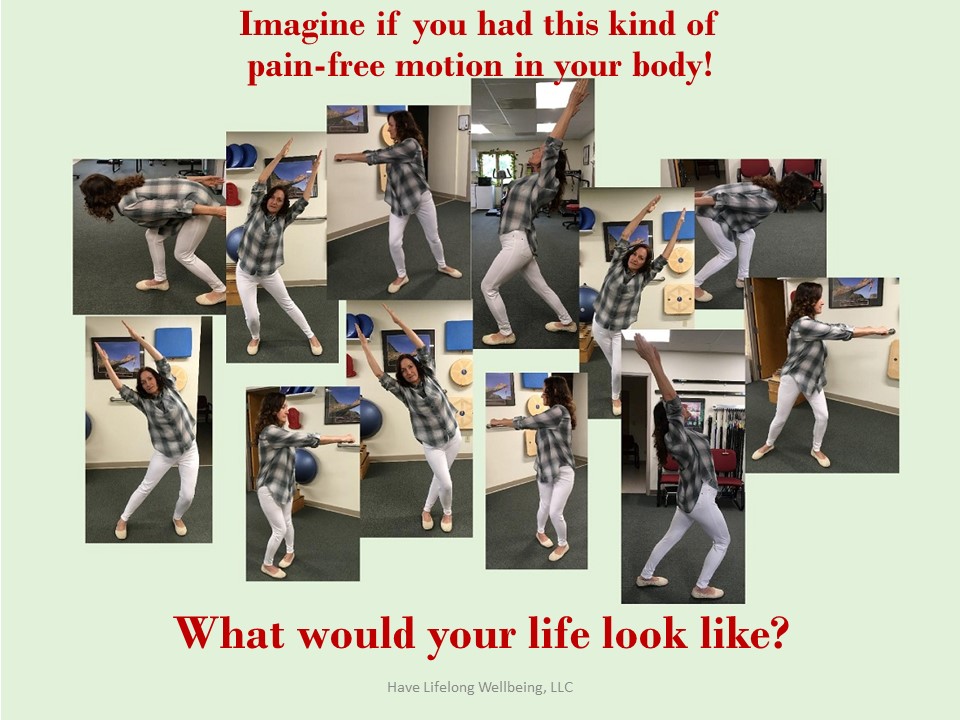
This assessment (which is found for free in the Move Without Pain Private Club) examines how the body moves through three planes of motion — forward/backward, side-to-side, and rotational — using six movements that evaluate dozens of joint actions simultaneously.
Progress was not linear. There were ups and downs. But overall, mobility improved
significantly for most. Some members ultimately achieved complete, pain-free motion in all movements — something they had not experienced in years.
Food Journal — The Reality Check
Food and hydration profoundly affect pain, inflammation, energy levels, and healing.
Recording intake revealed patterns not seen clearly before. Guidance and support allowed changes to occur without overwhelm. For many, this was a pivotal shift and the group support provided was priceless.
Balance Assessment
Balance testing revealed stability when the body was challenged in real-life movement
patterns. We didn’t simply stand on one leg and count to 10. We measured the ability to maintain an upright position with movement in all 3 planes of motion.
Those with initial deficits showed measurable improvement. Which means reduced fall risk. Which means preserved independence.
More to Come
We met this past week for an ‘exit interview’ to better discern the personal impact this BETA
program had on each one. I’m still gleaning facts and reviewing data from a detailed survey they all completed to see how this could be rolled out to help others efficiently, effectively, and affordably.
The Real Victory Was Not the Numbers
Yes, there were measurable improvements. Strength increased. Pain decreased. Mobility returned. Confidence resurfaced. Better habits were established.
Those who could not stand from a chair without pain improved dramatically over time. Some went from ten sit-to-stands to twenty-five without pain. Others progressed from sever discomfort to only intermittent symptoms.
Several participants who once experienced persistent knee, hip, or back pain reported that their symptoms became minimal or manageable as consistency replaced avoidance. Was everyone successful in all areas? No. Yet everyone reported benefits that would not have happened otherwise.
But scores and numbers weren't the true transformation. The greatest success was identity. They became people who finish what they start. They crossed the finish line and that changes everything.
Because your brain will always fight goals that don’t match who you believe you are. But when your identity shifts — when you begin to see yourself as someone who shows up, someone who perseveres, someone who can improve — your brain stops resisting and starts cooperating.
That is when progress becomes sustainable.
These were not miracles. They were systems put into place with support and expert guidance.
When people stop guessing and start following a guided path — when they are taught what to do, why to do it, and how to stay accountable — progress stops being random.
It becomes predictable.
|
 |
|
I plan to share more details about the outcome of this program next month. The power behind the strategies that were implemented and the setbacks that were overcome. In the meantime, let me conclude with this.
The door these brave individuals walked through is not closed. It never was. If you’re tired of guessing… If you’re tired of managing symptoms instead of solving problems… If you’re ready to
become someone you don’t yet recognize… Then start. Now.
Not perfectly. Not dramatically. Just decisively. Because the most amazing transformation is not physical. It is the moment you realize your future is still negotiable, and who you become in six months is still up to you. |
|
|
 |
|
Would you like to locate the core issue(s) of your pain, balance deficits, or weaknesses and learn how to address them with powerful (safe) self-care methods so you can move without pain and age without decline? You can work with Eileen one-on-one! Just ask a question or schedule a consultation via Zoom by clicking the button below.
You CAN resolve pain and age independently by training authentically and nourishing well. |
| Click Here to Learn More |
|
|
 |
Recipe of the Month
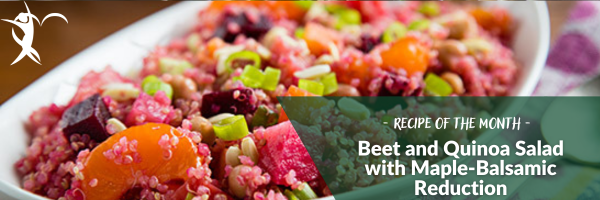
Beet and Quinoa Salad with Maple-Balsamic Reduction
I absolutely LOVE beet salads. Whenever I’m out to eat and one is on the menu, I must have it. I think you’ll love this recipe. I found it at Fat Free Vegan Kitchen. You can cut down on the steps and time by purchasing beets already roasted. I also love all the flavored balsamic vinegars available so I skip making the reduction. If you have the time, you can do it all. If not, it’s still amazing!
Preparation: 30 minutes
Cooking time: 65 minutes(if roasting your own beets)
Servings: 6 (depends on your appetite😊)
Ingredients:
-
3 large beets about 16-20 ounces
-
1 1/2 cups uncooked quinoa rinsed very well
-
2 2/3 cup vegetable broth or water plus veg. bouillon
-
4 cloves garlic finely minced
-
1 1/2 cup chickpeas or one 15-ounce can, rinsed and drained
-
4-6 clementines, satsumas, or other small seedless oranges about 1/12 cups orange sections
-
1/2 cup green onions sliced thin
-
1/4 cup slivered almonds Optional, but good.
-
1/2 cup white balsamic vinegar (I use flavored for added punch and skip making the reduction, it’s still delish!)
-
2 tablespoons maple syrup (if making the reduction)
-
salt and freshly ground black pepper to taste
Preheat oven to 400 F. (I use my toaster oven to save energy.) Wash each beet well and wrap it in aluminum foil. (You can wrap it first in parchment paper and then foil if you don’t want it coming into contact with the aluminum.) Bake for 50-60 minutes, until you can pierce a beet with a fork. Set aside to cool.
While the beets are cooking, cook the quinoa. Rinse the quinoa in a fine mesh strainer and drain well. Heat a medium-size saucepan, add the quinoa, and toast it for a few minutes until much of the liquid is evaporated. Add the vegetable broth and garlic, bring to a boil, reduce heat to low and cover. Cook for 15 minutes. Remove from heat and let stand until all liquid is absorbed. Fluff and let cool.
When the beets are cool enough to handle, trim off the top and remove the skin by holding a beet under running water and rubbing the skin with your thumbs. Use a knife to peel off any stubborn patches.
Dice the beets. Add them and the chickpeas, clementines, green onions, and almonds to the quinoa.
Make the balsamic reduction: Put the balsamic and maple syrup in a small saucepan and heat it over medium heat, stirring constantly, until it boils. Continue stirring until the volume reduces by about a third–it should take about 5 minutes. Remove from heat and let cool. If it’s too thick to pour once cool, return it to the heat and stir in more balsamic vinegar until it’s pourable. Pour it over the salad and stir well.
Refrigerate the salad until ready to serve.
NOTE: You can buy already prepared balsamic reduction if you want to save time, but it may be made with sugar instead of maple syrup (and more of it). Personally, I use flavored balsamic vinegars and don’t miss using a reduction. It’s still a-m-a-z-i-n-g!
|
|
|
Want peace & joy instead of fear & stress? |
|
|
|
|
|
|